A Game-Changing Opportunity in Defense Contracting
The Missile Defense Agency (MDA) is preparing to unveil one of the most significant defense procurement opportunities of the decade. With an estimated ceiling value of $151 billion, the Scalable Homeland Innovative Enterprise Layered Defense (SHIELD) IDIQ represents a monumental opportunity for government contractors across multiple disciplines. This massive contract vehicle aims to revolutionize America’s missile defense capabilities through next-generation technologies and innovative approaches.
At NVS Strategic Solutions, we’re closely tracking this developing opportunity to help our clients position themselves for success. Here’s our comprehensive breakdown of what we know so far about this landmark procurement.
Understanding the SHIELD Program: Purpose and Vision
The SHIELD program emerges at a critical juncture in global security. As adversaries continue developing increasingly sophisticated missile systems—including hypersonic weapons capable of evading traditional defense systems—the Department of Defense is responding with an ambitious, comprehensive approach to homeland protection.
SHIELD’s core mission is to develop and deploy an advanced, multi-domain defense system capable of detecting, tracking, intercepting, and neutralizing a wide spectrum of threats to the United States, its deployed forces, allies, and partners. The program takes a holistic approach to defense, addressing threats across all phases of flight from various vectors—land, sea, air, space, and cyberspace.

Focus on Emerging Priority Areas
Federal agencies are increasingly directing funds toward several key priorities:
- Cybersecurity and zero-trust architecture
- Supply chain resilience
- Climate adaptation and sustainability
- Artificial intelligence and machine learning
- Infrastructure modernization
Contractors who can align their capabilities with these areas and articulate how their solutions address specific agency challenges will stand out in evaluation processes.
Leverage Set-Aside Programs Strategically
The Biden Administration has reinforced commitment to small business goals, particularly for socioeconomic categories like women-owned, service-disabled veteran-owned, and HUBZone businesses. If you qualify for these designations, ensure your SAM.gov profile accurately reflects these statuses and target opportunities where they give you a competitive edge.
Tip: Don’t just list certifications—demonstrate their value to the agency in your proposals by explaining how your status enables better performance, reduced risk, or other tangible benefits.
2. Build Relationships Before RFPs Drop
In today’s government market, the contractor who begins their pursuit when an RFP is published is already behind.
Engage Early and Often
- Attend industry days, both virtual and in-person
- Schedule capability briefings with program offices
- Participate in pre-solicitation conferences
- Monitor agency forecasts and engage when opportunities enter the planning phase
- Join industry associations where government decision-makers speak
“The most successful government contractors are building relationships with contracting officers and program managers 12-18 months before a solicitation hits the street,” notes our capture management team at NVS Strategic Solutions. “These relationships provide invaluable intelligence about agency pain points that competitors simply won’t have.”
Leverage the Power of Strategic Teaming
No single company can address all government requirements. Smart contractors know when to prime and when to sub based on their capabilities, past performance, and competitive positioning.
Effective teaming strategies include:
- Building relationships with large primes if you're a small business
- Creating mentor-protégé arrangements for knowledge transfer
- Establishing long-term teaming relationships that span multiple bids
- Ensuring complementary capabilities that strengthen the overall solution Visit our Capture Management page to learn how we can help you identify and secure the right teaming partners.
3. Craft Proposals That Evaluators Can't Ignore
Even the strongest relationships won’t overcome a weak proposal. Today’s evaluators are overwhelmed, often reviewing dozens of proposals against tight deadlines.
Speak Directly to Evaluation Criteria
Review the evaluation factors carefully and structure your proposal to directly address each one. Use the same terminology, create section headings that mirror evaluation criteria, and make scoring easy for the evaluators.
Differentiate Through Innovation
Government agencies increasingly value innovation—but only when it clearly connects to mission outcomes. For each innovative approach you propose:
- Clearly explain the innovation
- Quantify its benefits to the government
- Demonstrate how you've successfully implemented it before
- Mitigate perceived risks associated with the approach
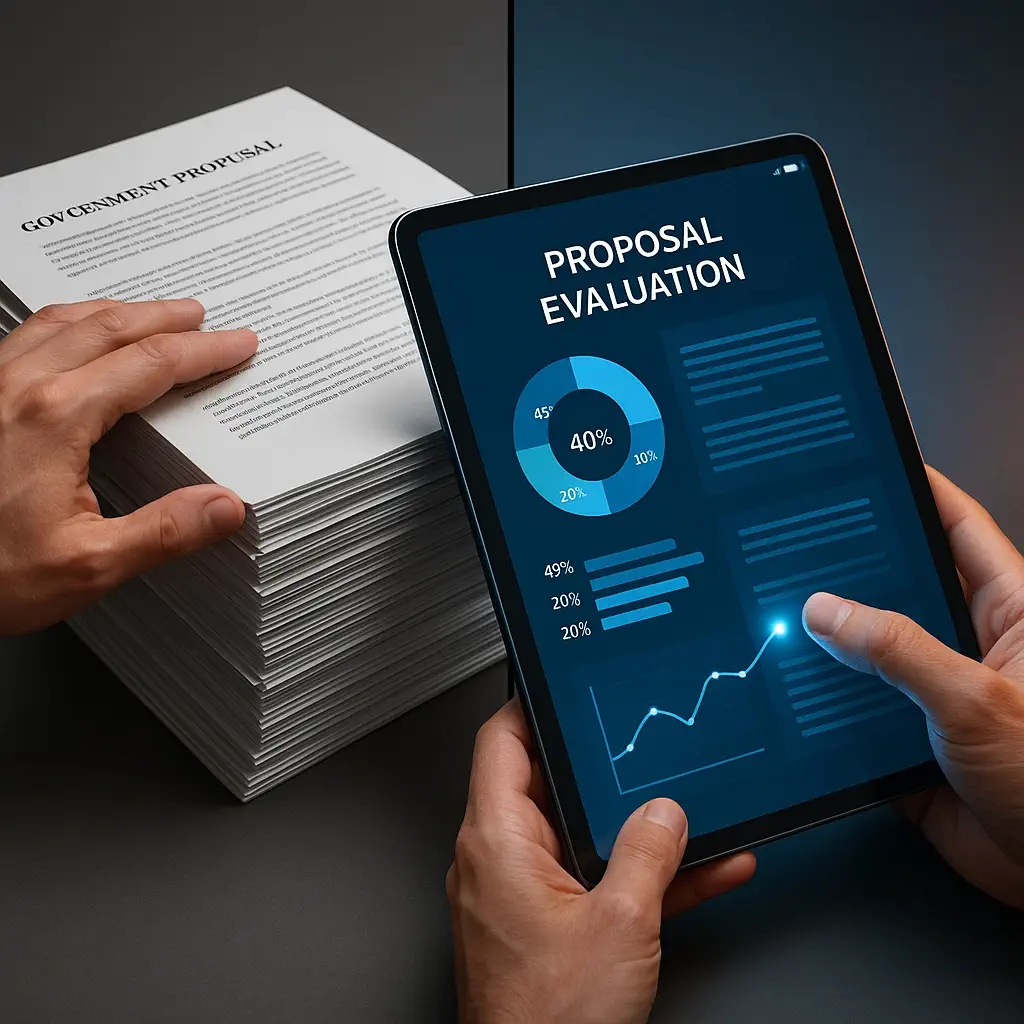
Leverage Data and Graphics Effectively
Dense text loses evaluators’ attention. Break up your proposals with:
- Infographics that demonstrate process flows
- Tables summarizing key features and benefits
- Charts showing performance metrics
- Callout boxes highlighting discriminators Our Business Development team specializes in creating compelling proposal graphics that communicate complex value propositions at a glance.
4. Navigate New Compliance Hurdles
Recent regulatory changes have created both challenges and opportunities for government contractors. Staying ahead of these changes can be a competitive advantage.
Cybersecurity Maturity Model Certification (CMMC)
With CMMC requirements being phased in across defense contracts, contractors who achieve certification early will have a significant advantage. Begin preparation now:
- Conduct a gap assessment against the appropriate CMMC level
- Develop and implement a plan of action
- Consider working with a Registered Provider Organization (RPO)
- Document your progress toward compliance
Supply Chain Risk Management
Executive Order 14028 and other recent directives have placed increased emphasis on supply chain security. Contractors should:
- Map their entire supply chain for critical components
- Implement risk management procedures for suppliers
- Develop contingency plans for supply disruptions
- Document compliance with Made in America requirements
“Compliance is increasingly becoming a competitive differentiator,” says our compliance team. “Contractors who can demonstrate robust compliance programs are winning more contracts, even when they’re not the lowest-priced bidder.”
For comprehensive support with government contract compliance, visit our Government Contract Compliance page.
5. Leverage Technology for Competitive Intelligence
The most successful contractors use technology to identify opportunities earlier and respond more effectively than their competitors.
Implement a Robust Opportunity Tracking System
Manual opportunity tracking is no longer sufficient. Today’s winning contractors use advanced platforms to:
- Monitor SAM.gov and other opportunity sources in real-time
- Track agency spending patterns
- Analyze competitor win rates and pricing strategies
- Develop automated alerts for target agencies and NAICS codes
Use AI to Enhance Proposal Development
Artificial intelligence tools can significantly improve proposal quality and efficiency:
- Analyze past successful proposals to identify winning patterns
- Check compliance with RFP requirements automatically
- Improve readability and clarity of proposal text
- Generate first drafts of standard proposal sections

6. Invest in Your Team's Capabilities
In a tight labor market, having the right talent can be the difference between winning and losing.
Develop Subject Matter Expertise
Agencies increasingly value deep domain knowledge. Invest in:
- Certifications relevant to your target contracts
- Specialized training for technical staff
- Industry-recognized credentials
- Thought leadership content that demonstrates expertise
Build a Dedicated Capture Team
Ad hoc proposal responses rarely succeed in today’s market. Consider:
- Dedicated capture managers for high-priority opportunities
- Professional proposal writers and graphic designers
- Regular capture strategy sessions
- Post-award and post-loss reviews to continuously improve
Learn more about building effective government contracting teams on our Human Resources page.
Bringing It All Together: Your Action Plan
Winning in today’s competitive government contracting environment requires a holistic approach. Start by implementing these steps:
- Evaluate your positioning: Identify where you can credibly claim unique expertise and focus your efforts there.
- Build your relationship network: Map key stakeholders at your target agencies and develop a systematic outreach plan.
- Refine your proposal process: Review recent submissions, identify weaknesses, and implement a more structured approach.
- Address compliance gaps: Conduct a thorough assessment of your compliance with current and upcoming requirements.
- Upgrade your technology: Invest in tools that provide better opportunity intelligence and proposal development capabilities.
- Develop your team: Ensure you have the right mix of capture, technical, and compliance expertise to pursue target contracts.
The government contracting landscape will continue to evolve, but contractors who master these fundamentals will consistently outperform their competitors.
At NVS Strategic Solutions, we specialize in helping contractors implement these practices and win more contracts. Visit our GovCon Strategy page to learn how we can help you navigate today’s competitive environment and emerge victorious.
Remember: in government contracting, success isn’t just about being the best—it’s about being the best at proving you’re the best. The tactics outlined above will help you do exactly that.